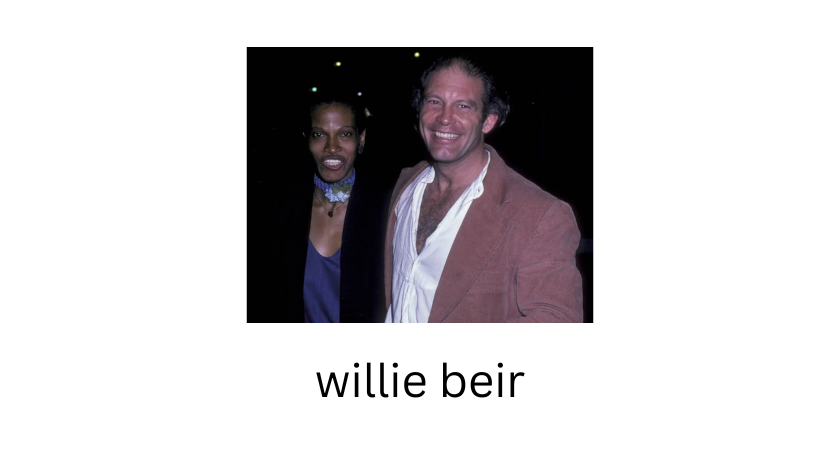
Some stories in Hollywood get lost behind the bright lights and red carpets. They are not about blockbuster movies or award speeches, but about real people who lived with grace, loved deeply, and left marks on the world that cannot be measured by box office numbers. Willie Beir’s story is one of those. She was not a household name, and she probably preferred it that way. But her life, though brief, carried a weight and meaning that continues to ripple through the lives of those she touched, especially her husband, actor Max Gail, and their daughter, India.
When we talk about Willie Beir, we are really talking about the human side of fame. We are talking about what happens when the cameras stop rolling, and real life begins. We are talking about love that does not need publicity, strength that does not need announcement, and a woman who faced the hardest battle of her life with a quiet courage that deserves to be remembered. Her story is not just a footnote in Max Gail’s biography. It is a standalone narrative of resilience, motherhood, and the kind of love that changes people forever.
Growing Up in Texas: The Roots of Resilience
Willie Beir was born on January 10, 1945, in Harris County, Texas. To understand who she became, you have to understand where she came from. The 1940s and 1950s in Texas were not easy times for African American families. Segregation was still the reality, opportunities were limited, and the world often told young black girls that their dreams did not matter as much as those of others. But within these challenges, communities built incredible strength. Families leaned on each other, churches provided sanctuary, and neighbourhoods created their own support systems that the outside world refused to give.
Willie grew up in this environment, and it shaped her in ways that would define her entire life. She learned early that strength does not always mean being loud. Sometimes, the strongest people are the ones who listen more than they speak, who comfort others when they themselves are hurting, and who keep going when everything seems stacked against them. Her family valued hard work, faith, and kindness above all else. These were not just values they talked about; they were survival tools in a world that was not always welcoming.
Her childhood was marked by the kind of tight-knit community bonds that seem rare today. Neighbours looked out for each other’s children, shared meals, and celebrated milestones together. Willie absorbed these lessons about connection and care. She became known as someone who could make anyone feel comfortable, who remembered small details about people’s lives, and who offered help without being asked. These qualities would later make her an anchor for Max Gail in the often chaotic world of Hollywood.
Education during this era for African American students in Texas meant navigating a system that was still struggling with integration and equal resources. Willie attended school during the 1950s and 1960s, a time of enormous social change. While specific details about her schooling are not widely documented, the environment she grew up in suggests she developed strong communication skills and an appreciation for the arts. People who knew her described her as warm, expressive, and naturally drawn to creative work. She had a way of telling stories and connecting with people that made them feel seen and heard.
Finding Her Place in Entertainment
Willie Beir did not move to Hollywood with dreams of becoming a superstar. That was never her style. Instead, she found her way into the entertainment industry through small roles and behind-the-scenes work. She appeared in minor roles in television and film, though none of them made her famous. And honestly, that seemed to suit her just fine.
What made Willie stand out on set was not her ambition for the spotlight, but her genuine presence. In an industry often criticised for being fake and superficial, she was refreshingly real. Crew members and fellow actors remembered her for bringing a calm, positive energy to every project. She had a sense of humour that could lighten tense moments, and a kindness that made long shooting days feel shorter. She was the type of person who would remember a makeup artist’s birthday or bring coffee for the production assistants without being asked.
Her approach to work reflected her personality: steady, authentic, and focused on human connection rather than personal gain. While many people in Hollywood are constantly networking, calculating their next move, and trying to climb higher, Willie was content to do good work and treat people well. This authenticity is rare in any industry, but especially in entertainment. It is also exactly what drew Max Gail to her when their paths finally crossed.
Meeting Max Gail: When Two Worlds Came Together
The early 1980s were a transformative time for Max Gail. He was at the height of his fame, playing Detective Stan “Wojo” Wojciehowicz on the hit television series “Barney Miller.” The show was a cultural phenomenon that ran from 1975 to 1982, and Max had become a recognisable face in American households. But fame, as many celebrities will tell you, can be incredibly lonely. People surround you, but you often feel disconnected. You have success but wonder if anyone sees the real you beneath the character you play.
Willie and Max met during this period, and their connection was immediate and deep. Max has spoken about being drawn to her warmth, her intelligence, and her steady confidence. In Willie, he found someone who was not impressed by his celebrity status. She saw him as a person, not as a television character. This genuine connection is the foundation of any lasting relationship, but it is especially precious when one person lives in the public eye.
Their courtship happened during a time when interracial marriages were still relatively rare and sometimes controversial in the United States. Even in progressive Hollywood, there were social pressures and prejudices that couples like Willie and Max had to navigate. But they did not let external opinions dictate their hearts. They loved each other openly and confidently, showing a courage that went beyond their personal happiness. Their relationship stood as a quiet statement that love transcends race, background, and social expectations.
They married on February 12, 1983. The wedding was a celebration of their commitment and of their shared values. Friends who attended described it as warm and genuine, lacking the Hollywood pretension that often characterises celebrity weddings. Willie brought a grounding influence to Max’s life. While he navigated the demands of his career, she created a home that was peaceful, loving, and real.
The Joy of Motherhood
In 1984, Willie and Max welcomed their daughter, India Gail, into the world. For Willie, motherhood was not just a new role; it was a calling she embraced with her whole heart. Those who knew her during this time say she transformed into an even more nurturing, attentive version of herself. She was devoted to creating a stable, loving environment for India, determined to give her daughter the kind of childhood that builds confidence and security.
Becoming a mother brought out Willie’s gentlest qualities. She was hands-on, present, and deeply invested in India’s well-being. Even as she balanced the challenges of new motherhood, she maintained the warmth and grace that defined her. The early months with India were filled with the normal joys and exhaustion of parenting: sleepless nights, first smiles, and the overwhelming love that hits you when you hold your child.
Max often credits Willie with creating the emotional foundation of their family. While he continued to work in television and film, Willie managed the home front with what friends described as “effortless grace.” She made sure that despite Max’s fame, their family life remained grounded and private. She protected their daughter from the invasive aspects of celebrity culture, wanting India to have as normal a childhood as possible.
The Diagnosis That Changed Everything
Shortly after India’s birth, Willie received devastating news. She was diagnosed with cancer. The specific type and details of her diagnosis were kept private, which was consistent with how Willie lived her entire life. She never sought public attention, and she did not want her illness to become a media spectacle. But the impact on her family was profound and immediate.
The years 1984 to 1986 became a blur of doctor appointments, treatments, and the emotional rollercoaster that comes with fighting a serious illness. Willie faced her diagnosis with the same quiet strength she had shown throughout her life. She did not complain publicly or seek sympathy. Instead, she focused on her family, her daughter, and maintaining as much normalcy as possible for as long as possible.
Max stood by her side through every step of the journey. He has spoken about how Willie’s courage inspired him daily. Even on her hardest days, she was thinking of others. She continued to nurture India, to support Max, and to face her mortality with a dignity that left a lasting impression on everyone who witnessed it.
The couple explored various treatment options, including both traditional medical approaches and alternative therapies. This search for healing would later influence Max’s advocacy work. Willie remained hopeful but realistic, balancing her desire to fight for more time with her family against the physical reality of her declining health.
Final Years and Lasting Impact
Willie Beir passed away in 1986, just three years after marrying Max and two years after becoming a mother. She was only 41 years old. Her death was a profound loss, not just for her family but for everyone who had known her gentle strength. Max was left to raise their young daughter alone, stepping into the role of both mother and father while grieving the love of his life.
The immediate aftermath of Willie’s death was understandably difficult. Max had to navigate single parenthood while dealing with his own grief, all while maintaining his career to support his family. Friends describe this period as one of immense challenge but also of growth. Max drew on the strength he had witnessed in Willie to keep going, to be present for India, and to honour his wife’s memory through his actions.
Willie’s influence on Max did not end with her death. In fact, in many ways, it grew stronger. Her battle with cancer inspired Max to become deeply involved in cancer awareness and alternative medicine advocacy. In 1988, he narrated the documentary “Hoxsey: When Healing Becomes a Crime,” which explored alternative cancer treatments. This work was directly motivated by his experience with Willie and his desire to help others facing similar battles.
A Legacy of Love and Strength
Today, Willie Beir is remembered through her daughter, India Gail, who has grown into a creative professional and speaks about how her mother’s legacy has shaped her life and work. India carries forward the values Willie embodied: kindness, resilience, and authentic connection. In this way, Willie’s influence extends into a new generation, touching lives she never had the chance to meet.
Max Gail has continued to honour Willie’s memory through his activism and his approach to life. He has spoken in interviews about how her death taught him to value every moment, to prioritise relationships over achievements, and to use his platform to help others. The documentary work he did, inspired by Willie, has educated countless people about alternative approaches to cancer treatment.
But perhaps Willie’s most important legacy is simpler and more universal. She represents the countless people who face illness with courage, who love their families fiercely, and who leave the world better than they found it through small, daily acts of kindness. She did not need fame to matter. She mattered because of how she treated people, how she loved her family, and how she faced her hardest days with grace.
Why Willie Beir’s Story Still Matters
In an age of social media and constant self-promotion, Willie Beir’s life offers a different model of significance. She did not have millions of followers. She did not star in blockbuster films. She did not seek the spotlight in any way. Yet her life had meaning, impact, and lasting influence. This is an important reminder that our visibility or our achievements do not determine our value, but by the quality of our relationships and the love we share.
Her story also highlights the reality of cancer’s indiscriminate nature. It can strike anyone, at any time, regardless of age, health, or circumstances. Willie’s battle came at what should have been the happiest time of her life, newly married and with a new baby. This unfairness is part of what makes her courage so remarkable. She did not let bitterness consume her. She chose love, even in the face of death.
For those going through similar struggles, Willie’s story offers a model of dignity and resilience. She shows us that we can face our hardest moments with grace, that we can prioritise our loved ones even while battling for our lives, and that our legacy is built on how we treat people, not on how long we live.
Conclusion
Willie Beir lived only 41 years, but she packed those years with love, strength, and authentic connection. From her roots in Texas to her marriage to Max Gail, from the joy of motherhood to the challenge of cancer, she navigated every chapter of her life with quiet grace, leaving a lasting impression on everyone she met. Her story is not just about being the wife of a famous actor. It is about being a person who loved well, who faced adversity with courage, and who continues to inspire through the legacy she left behind.
In remembering Willie Beir, we remember that the most important stories are often the quietest ones. We remember that strength comes in many forms, and that sometimes the bravest thing you can do is keep loving your family even when facing your own mortality. Her life reminds us to value our relationships, to face our challenges with dignity, and to leave the world a little kinder than we found it.
Frequently Asked Questions (FAQ)
Q1: Who was Willie Beir? A: Willie Beir was the first wife of actor Max Gail, best known for his role in the television series “Barney Miller.” She was born in 1945 in Texas, worked in minor roles in entertainment, and was known for her warm personality and private nature. She married Max Gail in 1983 and had one daughter, India Gail, before passing away from cancer in 1986.
Q2: How did Willie Beir and Max Gail meet? A: Willie and Max met in the early 1980s when Max was at the height of his fame on “Barney Miller.” They connected through shared values and emotional understanding, forming a deep bond that led to their marriage in 1983. Their relationship was notable for being an interracial marriage during a time when such unions still faced social challenges.
Q3: Did Willie Beir have any children? A: Yes, Willie and Max Gail had one daughter together, India Gail, who was born in 1984. Willie was deeply devoted to motherhood and worked hard to create a stable, loving home for her daughter despite her later illness.
Q4: What illness did Willie Beir have? A: Willie Beir was diagnosed with cancer shortly after giving birth to her daughter in 1984. She battled the disease for approximately two years before passing away in 1986. The specific type of cancer was kept private, consistent with her preference for maintaining personal privacy.
Q5: How did Willie Beir’s death affect Max Gail? A: Willie’s death had a profound impact on Max. It inspired him to become an advocate for cancer awareness and alternative medicine treatments. He narrated the 1988 documentary “Hoxsey: When Healing Becomes a Crime” and has spoken about how her courage influenced his personal growth and priorities.
Q6: What is Willie Beir’s legacy today? A: Willie is remembered through her daughter, India, who continues to honour her mother’s memory in her creative work. She is also remembered through Max Gail’s advocacy work and the example she set of facing illness with dignity and prioritising family love above all else.
Q7: When did Willie Beir die? A: Willie Beir passed away in 1986 at the age of 41, after a two-year battle with cancer.
About the Author